Study programme
See this recording of our November 2023 live session, in which the Global Arts, Culture and Politics Bachelor's programme is illustrated in detail.
The programme in short
You will study art as a medium, the big history of art and the relationship between power and representation. You look at culture and ecology and study sustainability from multiple perspectives. You research the politics of culture and learn to understand how contemporary culture is highly politicised. Artificial intelligence deeply influences our daily lives. We analyse how this works and what consequences AI has ethically, politically, and sociologically. You acquire skills such as (academic) writing, creating (websites, videos, exhibitions), archival research, discourse analysis, public speaking, debating, programming, interview techniques and quantitative research. These valuable tools enable you to understand, analyse and to engage actively with various global challenges.
-
Culture Wars: Introducing Culture and Social JusticePeriod 13
Struggles for social justice often make use of cultural symbols, artistic forms of expression and language as a tool of dissent. They thereby challenge hard-wired assumptions around the stability of cultures and call into question who belongs or is excluded from culture’s terrains.
-
Skills: Writing About Arts, Culture and PoliticsPeriod 13
This course provides a foundation in writing for different media and purposes, with an emphasis on basic academic writing. Students practise various styles, give editorial feedback, and work with AI tools while producing texts such as an opinion piece.
-
Historicising the GlobalPeriod 16
This course traces and unsettles the emergence of “The Global” through key artistic, cultural and historical developments of the past 500 years, and investigates alternative global histories and imaginaries through varied cultural and artistic practices.
-
Philosophy of Science and the HumanitiesPeriod 26
Students are introduced to key modes of thought at the intersection of Science and the Humanities and to formative debates from which lasting frameworks of analysis emerged in the 20th century.
-
Skills: Visual LiteracyPeriod 23
In museums, students learn to look at, describe and analyse artworks, formulate an opinion based on their observations, and apply these analytical tools to non-art objects.
-
Writing Women into History: Introducing Curating the PastPeriod 23
This course introduces the challenges and consequences of revisionist history through the example of women and gender inequality, and teaches methods and instruments to approach topical questions.
-
The Power of Persuasion: Rhetoric in the Information Age IPeriod 36
Students are introduced to core concepts from argumentation theory and the rhetorical tradition, explore persuasive discourse in domains such as political communication and online platforms, and learn to think critically about how persuasive communication shapes opinions and behaviours.
-
Cultural SociologyPeriod 46
Students study influential thinkers and foundational theories of sociology in relation to the Western contexts that shaped them. The course critiques Eurocentric assumptions without denying their value, and explores feminist, queer and decolonial perspectives toward a more pluriversal sociology.
-
Skills: Digital Literacy & Archival ResearchPeriod 43
Students learn to organise and analyse digital and analogue information by practising digital research methods. The course combines theoretical reflections on archives and digitisation with training in online research skills, emphasising reflexivity, ethics, and the challenges of digital inquiry.
-
Fake News: Introducing The Human and AIPeriod 43
Students examine the promises and risks of artificial intelligence in art, culture, and politics. They study generative AI tools such as ChatGPT and Midjourney, analyse their creative and societal implications, and learn to detect and critically assess AI-generated content.
-
Skills: Interviews & On Site ResearchPeriod 53
Students learn to conduct interviews and apply on-site research methods through hands-on practice. The course combines theoretical introduction with training in research techniques, teamwork, and observation, while addressing reflexivity, ethics, and the challenges of field research.
-
Earth Politics and the Future of Life: Introducing Reimagining SustainabilityPeriod 53
The course examines the climate emergency as a political and ethical phenomenon through biocentric and decolonial perspectives on nature, development, and sustainability. Students explore global case studies connecting environmental sustainability, climate justice, and the role of art in shaping sustainable futures.
-
Global Politics and PowerPeriod 5Period 612
-
Major specific coursesPeriod 1Period 2Period 3Period 4Period 5Period 648
Major Curating the Past; Major The Human and Artificial Intelligence; Major Culture and Social Justice; or Major Reimagining Sustainability
-
Philosophy of Science and the HumanitiesPeriod 26
The course explores key modes of thought linking science and the humanities since the nineteenth century. Students study formative debates that shaped twentieth-century frameworks of analysis and examine their epistemic influence on contemporary research cultures and the GACP specialisation streams.
-
Key Stories II: Arts, Culture and Politics in the WorldPeriod 36
-
GACP Thesis Research LabPeriod 46
-
(Programme related) Electives or MinorPeriod 1Period 2Period 3Period 4Period 542
-
Bachelor’s Thesis or Final Bachelor ProjectPeriod 5Period 612
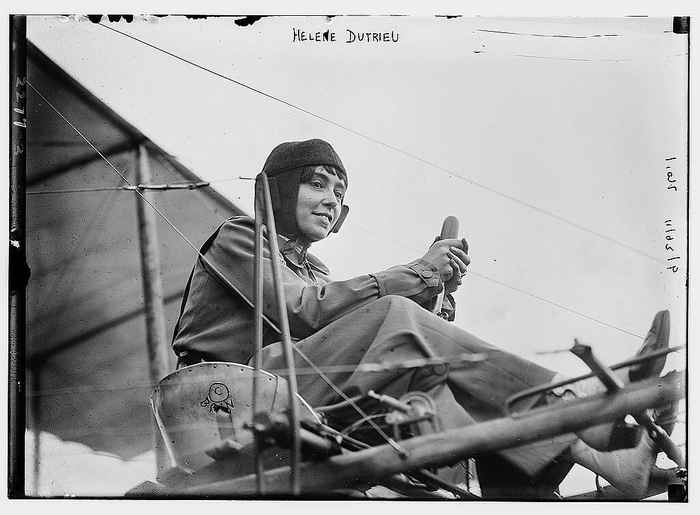
Global Arts, Culture and Politics students have created two podcast episodes for the course Writing Women Into History. The episodes focus on the underexposed role of women in history.
The first year
- In the first year, you will lay a broad foundation in the fields of art and media, sustainability, cultural policy and artificial intelligence. You will also gain skills in doing interdisciplinary research, and academic writing.
The second and third year
- In the second year, you will start your specialisation by choosing one of the four majors on the different global challenges. Additionally, you will be taught 'Philosophy of Humanities and Science' and follow the course 'Key Stories' with lectures from hot-shot specialists from various faculties and political, cultural and media figures.
- In the third year, you will take two electives and a minor, either in a different discipline within the Humanities or at a different faculty. You will also have the opportunity to study abroad. The programme will be completed with a Bachelor’s project in cooperation with cultural, artistic or governmental organisations.
- You choose to specialise in one of our four majors:
-
Curating the Past
The past does not simply survive: it is selected, preserved, represented and constantly reinterpreted. In Curating the Past, you explore how museums, archives, monuments, books, images and objects shape our understanding of history. Who decides what we remember, collect and display, and what gets forgotten? Drawing on history, art history, book history, heritage and museum studies, you investigate how the past is curated and made meaningful in the present.
Along the way, you develop knowledge and skills relevant to careers in:
- museums
- academia
- heritage institutions
- archives
- the wider cultural sector
 Copyright: Bob Bronshoff
Since #MeToo, women are listened to and believed at face value, which has changed how we think about the past and the present. In our major, students learn how to do archival research to find women’s voices and write them into history.
Dr Judith Noorman -
Reimagining Sustainability
In this interdisciplinary major you will study sustainability from multiple perspectives. Courses will explore the historical roots of the concept, the place of sustainability in contemporary ecopolitics, and the important role arts and culture can play in shaping more sustainable futures. You will analyse themes and gain insights from fields such as:
- Deep ecology
- Ecofeminism
- Nature and modernity
- Degrowth
- Sustainability in past societies
- The Anthropocene
- Indigenous approaches to sustainability
- Art and the environment
- Sustainable practices in cultural institutions
Museums and other cultural institutions have an important role to play in fighting climate change and shaping a more sustainable future for the planet.
Dr Colin Sterling -
Culture and Social Justice
Contemporary culture connects and divides. Film, music, art, dance and theatre travel across the globe faster than ever, bringing people closer. Simultaneously, proximity creates friction. In a globalising, post-colonial world (social) media discussions on topics such as gender, racism and #me that rub against different cultural norms existing in society can result in conflict. The arts are then often invoked to mediate and transform the problem of culture into a remedy.
The core themes of the major Culture and Social Justice are the global transformations of cultural practices, their underlying conceptions of culture and the socio-economic inequalities these create or tackle. You will analyse themes and gain insights from fields such as:
- (Post-)Colonial Studies
- Critical Heritage Studies
- Cultural Policy
- Gender & Sexuality Studies
- Global Studies
- Migration Studies
 Copyright: FGw, Eduard Lampe
To some people fashion can bring enjoyment; to others it can even mean empowerment. Yet, fashion is also the product of a global industry that is structurally riddled with injustice in terms of gender, race and class, as well as in the way it appropriates indigenous cultures and pollutes the planet. In order to grasp this complex global phenomenon, we cannot do without a social justice approach.
Dr Christine Delhaye -
The Human and Artificial Intelligence
Artificial intelligence deeply influences our daily lives: in the way we listen to music on Spotify, consume (fake) news, or contact friends on WhatsApp. This major will address questions of big data and AI from the point of view of the humanities and arts. We will study how AI works, how it is it programmed, and what consequences it has ethically, politically and sociologically. You will learn about the growing importance of AI in contemporary culture and society and study the critical thinking and intellectual debates in this fast-developing field, while acquiring the tools and framework to analyse new cultural and social datasets with AI methods. You will analyse themes and gain insights from fields such as:
- Artificial Intelligence and Ethics
- AI and Politics
- Content
- Digital Humanities
- Fake news
- Media Studies (such as TV, film, photography and social media)
- Platformisation
 Copyright: Tobias Blanke
AI has always been an interdisciplinary object. The humanities play an important role in developing its future.
Prof. Tobias Blanke, Humanities and Computing Expert
-
Internship and studying abroad
The programme allows for you to do an internship and/or to study abroad in the third year.
Internship
You can enrich your study programme as well as your CV by doing an internship. This will allow you to gain experience of the broad range of opportunities available to graduates of GACP. Students enrolled in the programme have previously followed internships in journalism, curating, educational charities, research and theatre programming.
Studying abroad
The UvA offers exchange opportunities with partner universities across the world, from South Africa to Finland, Chile to Japan. This gives you the opportunity to study abroad and expand your knowledge of arts, culture and politics in a global context. See current opportunities on the UvA World Map.
-
Double Bachelor's degree and Honours programme
Would you like to be challenged even more? You can choose to do two Bachelor’s degrees or follow the Honours programme.
Double Bachelor’s in Humanities
The Faculty of Humanities offers the possibility to obtain a degree from two different Bachelor's programmes. By means of exemptions you can obtain two degrees with a reduced effective workload. The double Bachelor's is intended for motivated students who are looking for an extra challenge and/or a broader perspective during their studies.
Honours programme
Highly-motivated students may qualify to take part in a selective Honours programme. This programme accounts for an additional 30 ECTS and will help familiarise you with various other aspects of academic research and prepare you for a subsequent Research Master's degree.
-
Learning and assessment
As a Bachelor’s student, you are expected to spend an average of 42 hours a week on your studies. Around 10 to 15 hours a week are spent attending lectures. The remaining time will be spent on self-study, preparing for lectures, seminars and exams, as well as completing coursework and assignments. In your second and third years you will have less hours of lectures and spent more time on self-study.
- During lectures, the lecturer will discuss and explain the literature you read and studied beforehand.
- In the seminars, you will work closely with your fellow students, collaborating on assignments, presentations and talks.
- Assessment consists of written or oral exams, presentations, essays, reports and assignments.

Ultimately, I was missing a certain humanistic approach and that’s why I chose Global Arts, Culture and Politics.Elena Cecconi, student Read the intervieuw