DSC Member Spotlight: Gowreesh Mago
7 April 2026
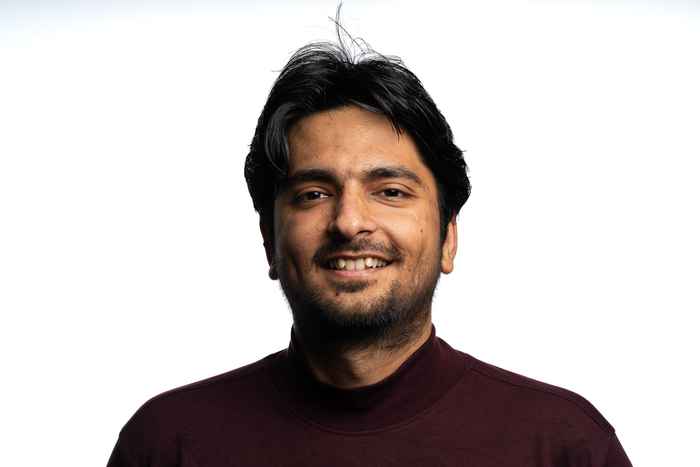
Can you tell us more about your role and how you apply data science to your projects?
I am a member of the HAVA Lab, where my work sits at the intersection of human alignment and responsible business, with a focus on video understanding. Videos provide rich semantic and spatio-temporal information. My research investigates the capabilities of Foundation Models in areas such as video advertisement understanding. A significant challenge in applying video understanding to business is the interpretation of abstract concepts, such as 'unity' or 'love'. These are intuitive for humans but challenging for current models due to their subjectivity and dependence on context. As a PhD student, I aim to assess and improve the capabilities of these models.
Is there a project from this past year that you are most proud of?
We conducted a study on the occurrence of abstract concepts in the video domain and the techniques used to interpret them. We organized the literature into three main pillars, highlighted key works, and identified both resolved and ongoing challenges. This effort resulted in a survey paper titled 'Looking Beyond the Obvious,' which has been accepted by the International Journal of Computer Vision. This work is significant because it opens new research directions for me and also for the broader community, encouraging more researchers to create datasets and explore novel techniques and algorithms.
What do you like most about being a DSC member?
I appreciate that many DSC members, including those in our lab, work across multiple disciplines. The initiative to unify supervisors from different labs fosters a collaborative environment, allowing us to seek guidance from a diverse group of experts. The community is active, with events held throughout the year. I also enjoyed contributing to the organization of the DSC Away Day last year.
What is your favourite data science method?
My day-to-day research involves deep exploration into the data, training models, comprehending losses and metrics, and reiterating. I like the complete pipeline from starting with a hypothesis, writing my solution in adherence to it, testing, and repeating. I am also currently looking at inductive priors to improve performance, such as using hyperbolic geometry to encode hierarchical information in the data.
Are you camp Python/R/or something else?
Due to the flexibility and the vast amount of libraries present in Python, it is a no-brainer for me to stick to (and worship) Python.