UvA Data Science Centre: Highlights 2025
Data Science Centre
10 June 2026
About the UvA Data Science Centre
The Data Science Centre, part of the UvA Library, is dedicated to advancing
research and education at the university by developing, sharing, and promoting AI and data science methods and technologies across faculties of the University of Amsterdam. This is achieved through a range of support and innovation programmes that connect and empower data scientists, data engineers, data stewards, bioinformaticians, ICT developers, PhD candidates, lecturers, and assistant professors across the University of Amsterdam, with central coordination from the UvA Library.

Affiliate members
As of early 2026, the Data Science Centre has 107 affiliate members across all university faculties. Affiliate members, and the larger research community at the UvA, continue to be supported by the DSC through a variety of activities including training sessions, seminars, and the annual Away Day. In addition, members are provided public platforms and opportunities to showcase their research, as well as receive support to attend external training and events. Each month, one Affiliate member is featured in the DSC Member Spotlight, highlighting the diverse applications and impact of data science. In 2025 we published 10 Member Spotlights.

Scientific impact of the DSC community
Our affiliate members, Accelerate cohort, and Interdisciplinary PhDs co-authored 165 scientific publications in 2025 as measured by research outputs tracked in Pure. A portion of these were enabled by the financial support of the DSC. Some highlights from the past year that were featured in the media include:
- Tessa Blanken’s collaborative work on insomnia subtypes was featured in the newspaper El Pais, among others.
- Victoria Degeler contributed to this collaborative article in the IEEE’s Internet Computing magazine on “Rethinking Computing Systems in the Era of Climate Crisis”.
- Marthe Möller was interviewed in this NOS piece on a new wave of online influencers.
- Fabio Votta’s research on AI and elections was featured in Trouw, de Volkskrant, and AD, among others.
- Fernando van der Vlist was featured in the podcast of the Rathenau Institute, highlighting his critical studies of digital platforms and apps, and AI in culture and society.
In addition to publications and media coverage, DSC community members havealso secured research grants. A notable example is Dr. Iris Groen (co-PI of the HAVA-Lab) and Dr. Pascal Mettes (HAVA-Lab manager), both part of the Video & Image Sense Lab at the Informatics Institute and supported by the DSC interdisciplinary PhD programme, who have been awarded prestigious Vidi career grants of up to €850,000 per project. This funding enables them to further develop their innovative research lines in AI.
Highlights of 2025
The first year of the HAVA-Lab
It was a vibrant first year for the Human-Aligned Video-AI Laboratory (HAVA-Lab), one of the PhD programmes of the Data Science Centre and the first research project at the UvA to involve all 7 faculties in interdisciplinary collaboration. The lab produced a number of outputs over the year, from a journal article on the challenges in adoption of AI in surgery and a paper on video perception in the brain (accepted to ICLR 2026, the International Conference on Learning Representations) to presentations on Deep Learning and Culture, which will feature at the upcoming STS NL 2026 conference in Twente. Papers by lab members were accepted by the International Journal of Computer Vision (On abstract concept recognition for video understanding), and the MIDL (Medical Imaging with Deep Learning) conference 2026 (On medical image segmentation).
DSC Away Day
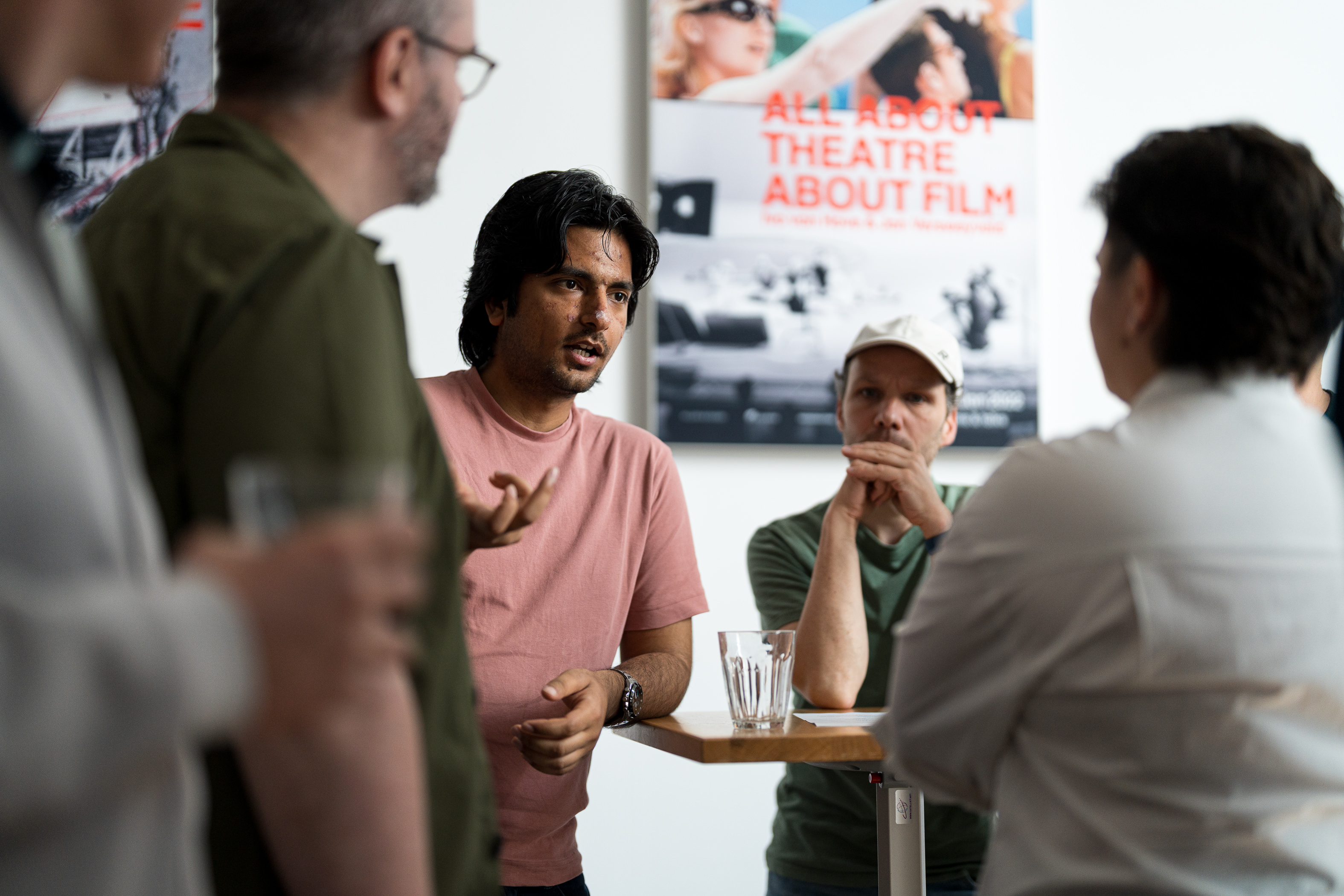
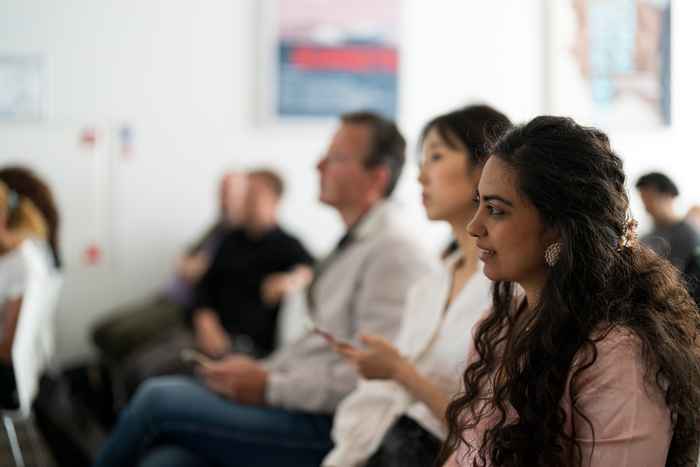
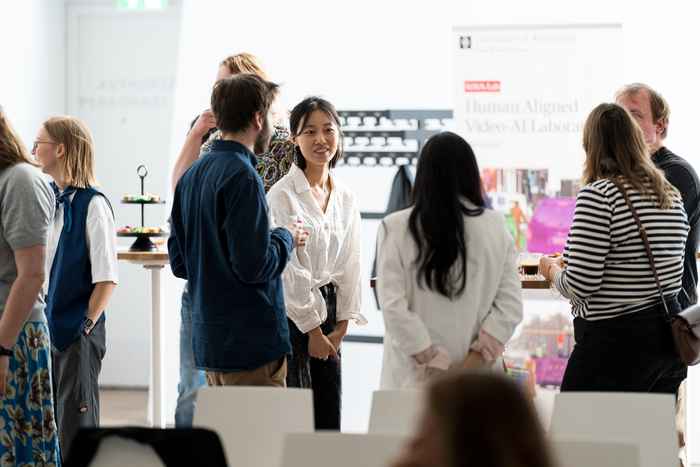
On June 16, the Data Science Centre hosted its annual Away Day, exclusively
curated for our DSC affiliate members. This year’s day was organised by the PhD students of the HAVA-Lab. Set against the cinematic backdrop of the Eye Film Institute Netherlands, the event brought together researchers from across disciplines to explore the timely and provocative theme of human-aligned AI in video.


AI & Data Science Day
On Thursday, 30 October, about 80 participants joined workshops and presentations during AI & Data Science Day 2025 to explore the latest developments in AI and data science at UvA. The flagship annual event of the UvA Data Science Centre was hosted in the brand-new University Library in Amsterdam. This year’s theme, ‘Data Science and AI as Teamwork’, highlighted how collaboration across disciplines and skills brings together the right ingredients to solve real-world problems and create impact. An interactive poster session at the end of the day brought together 23 AI and Data Science projects and communities from across the UvA.


Our programmes
DSC-IAS Fellowship
Two DSC and Institute for Advanced Study (IAS) fellows were appointed in April 2025, Delfina Martinez Pandiani and Paula Helm. Bringing together expertise in AI development, empirical ethics, and media studies, their collaborative research project aimed to develop an empirical ethics framework focused on AI-driven analysis of large-scale (monetized) personal data.
Coffee and Data Meetups
Trainings and Workshops
The DSC organized workshops and training sessions for all UvA researchers on topics that included “Data Visualization Bootcamp with Python”, “Building
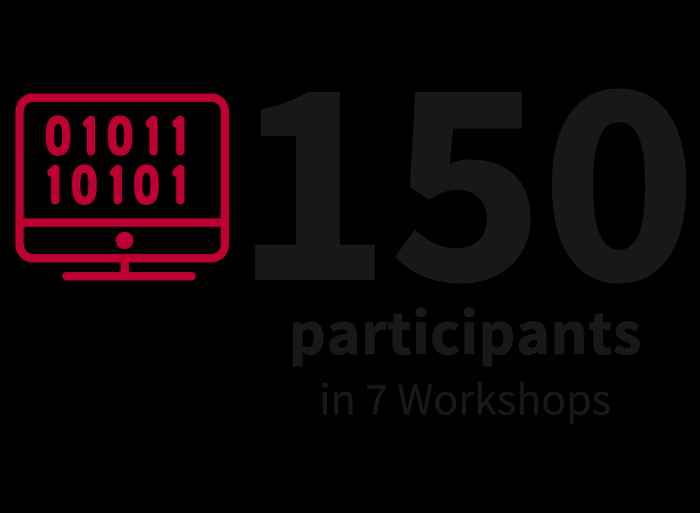
Interactive Web Apps in R”, “Crash Course in Machine Learning with JASP”, and “Introduction to LLMs and Information Extraction”. In collaboration with the Vrije Universiteit (VU) Amsterdam, the DSC also offered 3 “Introduction to Programming with Python, Unix Shell, and Git” Software Carpentry workshops. Taken together, these sessions saw more than 150 attendees.
Data Science Seminars
The Data Science Seminars provide a platform for DSC members to share
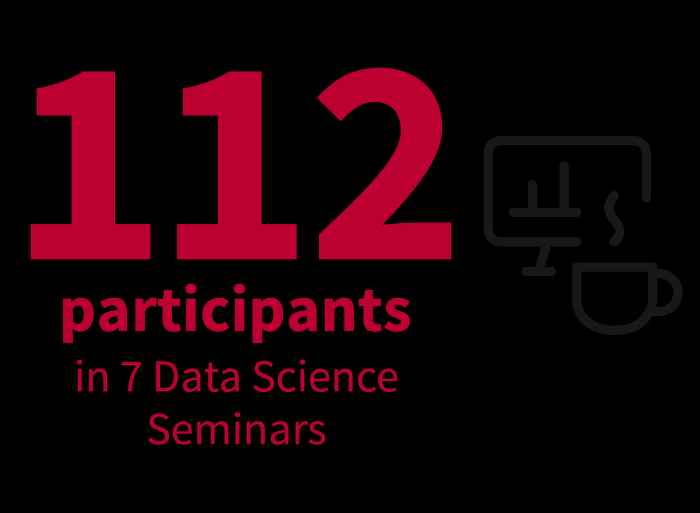
research and exchange ideas. Throughout 2025, seven seminar sessions were held, attracting a total of 112 attendees. Speakers included: Postdoctoral Researcher Justin Ho (Faculty of Social and Behavioural Sciences) on large language models and language diversity (March); Research Engineer Max Paulus (Faculty of Social and Behavioural Sciences) on research software and infrastructure (April); Research Data and Software Engineer Katinka Rus (Amsterdam UMC) on software automation for reproducible deployment of AI imaging models in clinical practice (May); Associate Professor Marija Maric (Faculty of Social and Behavioural Sciences) on meta-analyses in youth mental health research (September); Assistant Professor Navchetan Awasthi (Faculty of Social and Behavioural Sciences) on deep learning for medical imaging (September); Assistant Professor Delfina Martinez (Faculty of Humanities) on ethical paradoxes in AI-driven analyses of family vlogs (November); and Doctoral Researcher Erkan Karabulut (Faculty of Science) on pattern discovery in complex data (November).
Amsterdam Policy Hackathon
Furthermore, in September, the DSC proudly supported the Amsterdam Policy
Hackathon (APH), a newly founded student hackathon event in Amsterdam, bringing together 80 participants.
Looking to the Future: the DSC in 2026
2026 is a transformative year for the Data Science Centre, as we establish faculty hubs across the university that will expand the range of programmes and resources we offer. By the end of spring 2026, the DSC has already run a successful slate of events, ranging from a panel discussion on research infrastructure at the IAS Festival to a workshop on knowledge engineering with LLMs, as well as training sessions in Python and R. We’re looking forward to setting up a new online hub for the HAVA Lab, and to begin curating and organizing AI & Data Science Day 2026. Watch this space!