UvA AI Infrastructure for Research: A Cross-Faculty Showcase
Showcase event
- Date
- 4 June 2026
- Time
- 15:00 -17:00
- Location
- University Library
- Room
- Laboratorium (E -1.01)
About the showcase
This showcase event presents five short talks from researchers across the UvA's faculties about projects with AI implementation. Anchored by an introduction to the UvA's AI infrastructure (including the UvA AI Chat API and a forthcoming AI Research Manual), each presentation will highlight experiences with using generative AI in research, with dos and donts discovered through the process.
Aimed at anyone curious about making AI work in their own research or teaching context, join us for grounded, practical insights from researchers across the UvA and learn more about the possibilities of using the UvA's AI Infrastructure in your own work.
This event is organised by Data Science Center, AI Living Lab and FmG Research Lab.
Participation is free and the event concludes with a borrel.
Programme overview
| 15:00 – 15:05 | Arrival |
| 15:05 –15:20 | An introduction to UvA AI Chat and API, and the AI Research Manual |
| 15:20 – 17:00 | 5x presentations from researchers: 15 min talk each, followed by 5 min Q&A |
| 17:00 onwards | Networking and borrel |

Dr Siân Brooke is Assistant Professor and MacGillavry Fellow at the Digital Interactions Lab, where she leads an NWO Veni project on inclusive programming education with generative AI. Working at the intersection of data science and critical research, she studies how gender and intersectional inequalities are produced, reproduced, and occasionally disrupted in the design and use of technology. She is founder of the Queer + Feminist Informatics Network.
This talk explores how generative AI can be woven into teaching practice while keeping inclusivity front and centre. Drawing on my own experiments in the classroom, I'll share what's worked, what hasn't, and why I think the current reflex to "just go back to exams’” risks undoing years of progress on inclusive assessment. I'll close with some practical reflections for colleagues who are curious about AI but wary of the trade-offs.
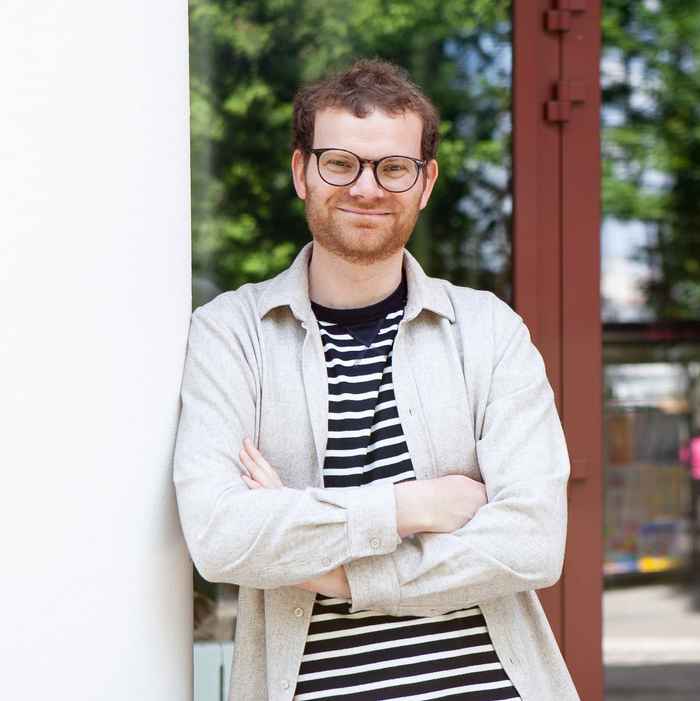
Rens Wilderom is a Lecturer in Computational Social Sciences (CSSci) with a background in cultural sociology. His current research focuses on LLM-assisted text analysis and on how digital platforms—such as Google Maps, Instagram, and TikTok—are reshaping the museum field and the ways in which people exhibit and engage with art.
This talk (given by Tom Heitland and Rens Wilderom) will present a project on how large language models (LLMs) can reliably identify novel, multidimensional concepts, such as the presence of “personalized service” in reviews of Michelin-starred restaurants. We will reflect on how to improve existing validation approaches by examining the extent of manually coded data required to assess LLM-generated outputs, reflecting on the process for constructing a gold-standard validation dataset, and addressing the challenges associated with relatively rare concepts and dimensions.
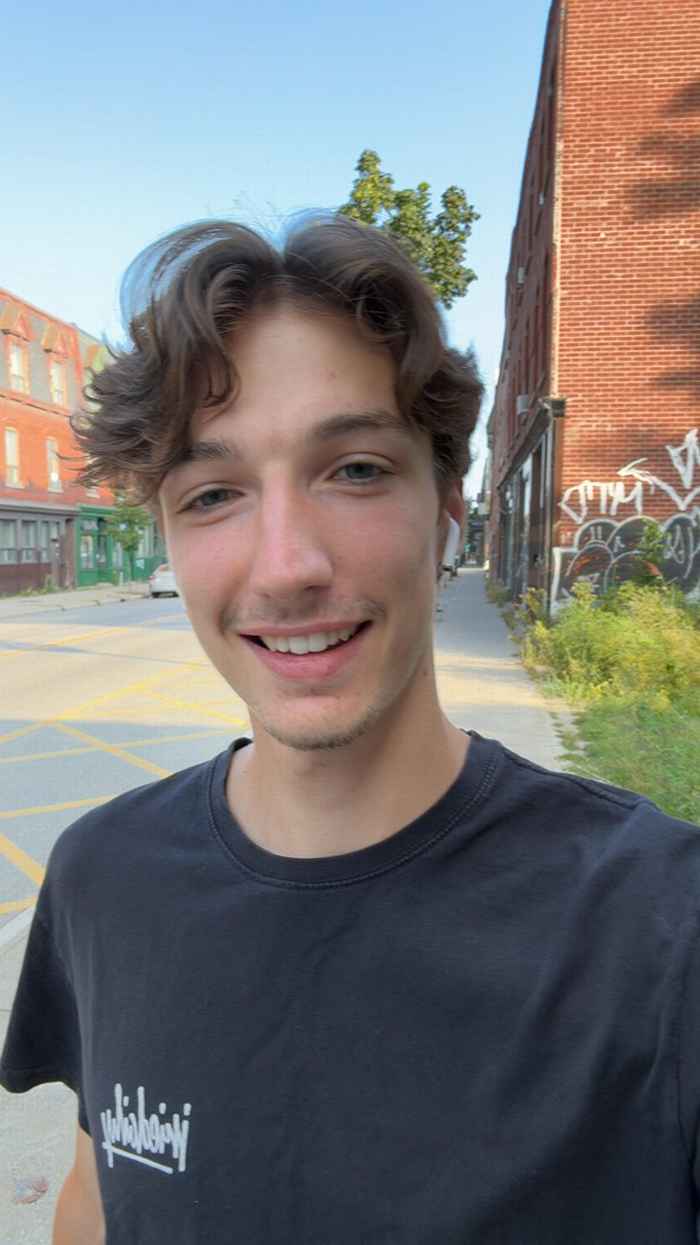
Tom Heitland is a student in the Research Master Social Sciences focusing on the politics of AI and the ideologies shaping it. He also works as a Prompt Engineer for the UvA AI team.
This talk (given by Tom Heitland and Rens Wilderom) will present a project on how large language models (LLMs) can reliably identify novel, multidimensional concepts, such as the presence of “personalized service” in reviews of Michelin-starred restaurants. We will reflect on how to improve existing validation approaches by examining the extent of manually coded data required to assess LLM-generated outputs, reflecting on the process for constructing a gold-standard validation dataset, and addressing the challenges associated with relatively rare concepts and dimensions.
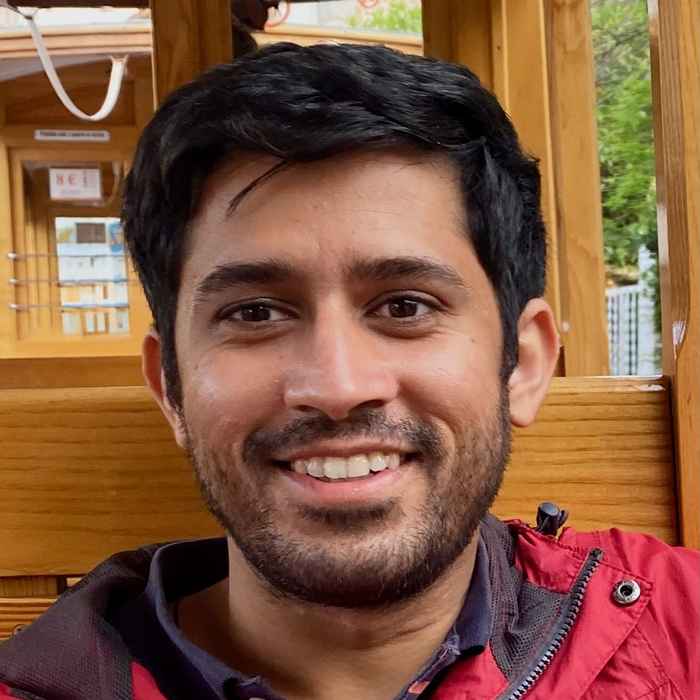
Saurabh Khanna is an Assistant Professor of Communication Science at the University of Amsterdam and a Research Fellow at the University of Oxford. He leads research on the diversity and limits of human knowledge at the Invisible Information Lab.
This talk will present surveychat – an open-source web application that enables researchers to administer surveys and conduct randomized experiments involving large language model (LLM)-based conversational agents, without the need to develop custom web application code

Pouneh Kouch is a research assistant and teacher for clinical and neurolinguistics courses at the University of Amsterdam, working on EEG, ERP, and behavioural studies on multilingualism, creativity, and the brain in aging.
Persuasive language shapes everything from courtroom verdicts to casual online debates, yet we still know little about which argumentative and emotional strategies actually maximize everyday persuasive success. This study uses a computational corpus-linguistic approach on r/ChangeMyView, comparing 122 “Delta” (successful) comments with word-matched non-Delta comments, annotated for argument substance (e.g., FF, PF, VF) via a persona-trained AI chatbot and for emotional appeal via VADER sentiment scores.

David Jackson is a PhD student at the Intelligent Data Engineering Lab at the University of Amsterdam. His current research focuses on data-centric AI and on how data quality issues, such as noise, missing values, and inconsistencies, affect the performance and trustworthiness of machine learning models. He also investigates AI-based methods for detecting and repairing such issues, with healthcare as a central application domain.
This talk will explore how large language models can be leveraged both to build and to improve scientific datasets. Drawing on examples from my own work, including BASIL DB, a knowledge graph database constructed from the biomedical literature using LLMs and other NLP techniques, I will discuss how LLM-based pipelines can extract structured information at a scale that manual curation cannot match. Building on this, I will turn to ongoing work on using LLMs to assess and improve dataset quality itself. I will reflect on practical lessons learned, including current challenges and future work.